
The Tools in a Farrier's Forge, Explained
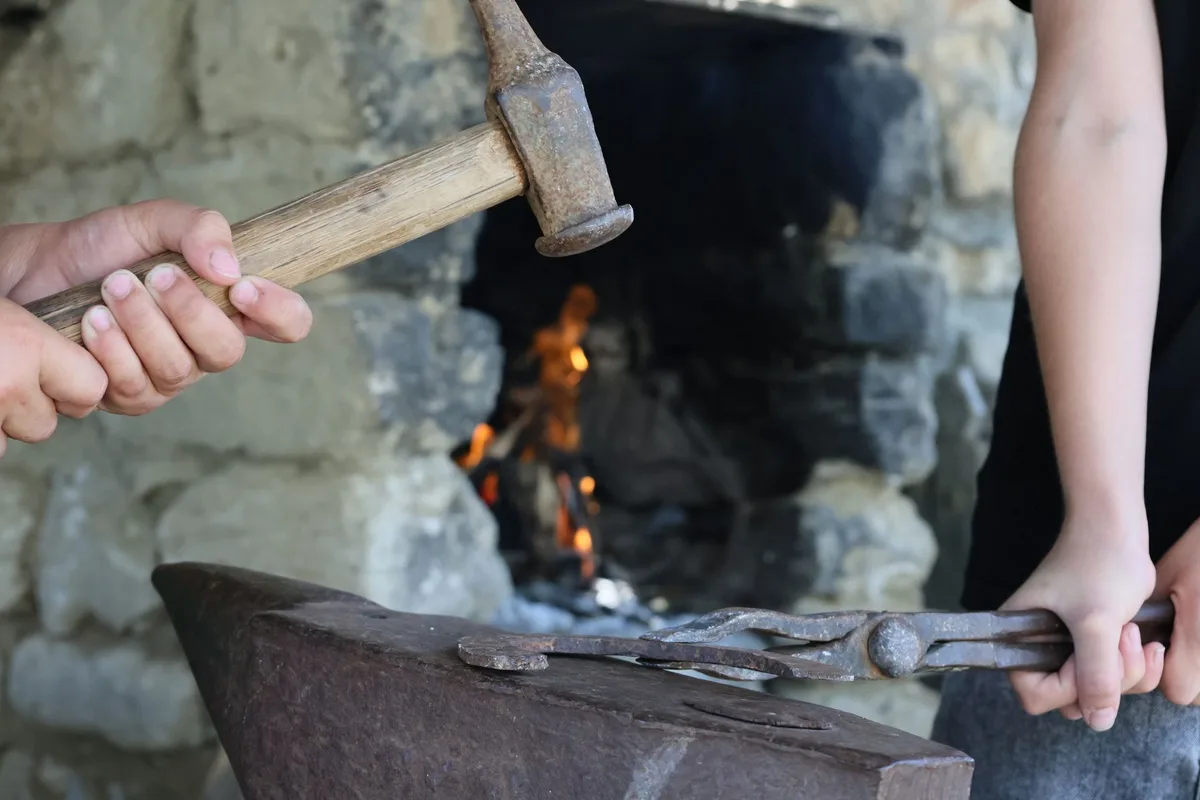
A farrier's kit looks like a small museum of single-purpose iron. Each tool exists because a general-purpose one was not good enough for that one job.
The anvil is the whole workshop in one object
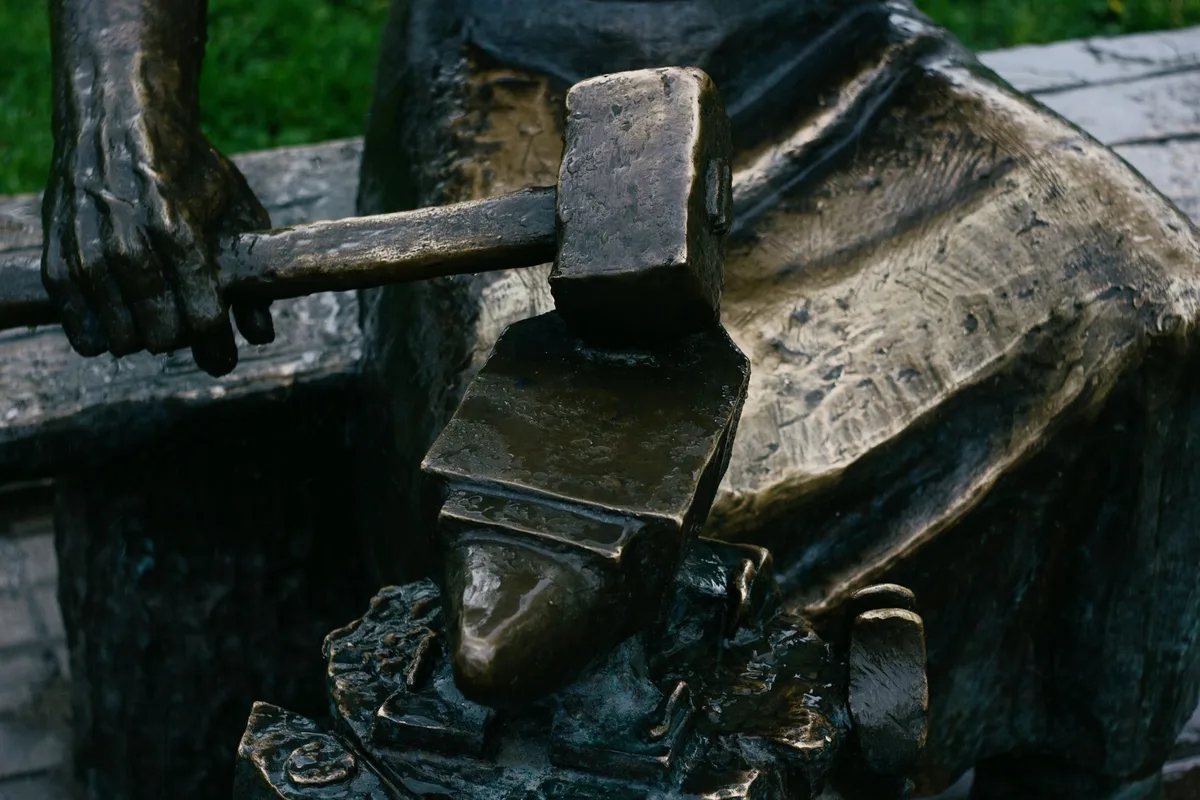
Everything about an anvil's shape earns its keep. The flat top face is for general hammering, the rounded horn at one end is for curving the shoe, and the square hole (the hardy hole) and round hole (the pritchel hole) near the far end hold other tools upright or let a punch pass straight through.
A farrier's travelling anvil is smaller and lighter than a fixed forge anvil, built to be lifted in and out of a vehicle daily without becoming a second job in itself.
Tongs, hammers and pritchels
Tongs come in several jaw shapes because a hot shoe needs to be gripped from different angles depending on the stage of work, and a badly fitting pair of tongs is how a hot shoe ends up dropped. The farrier's hammer has a specific weight and a cross-peen head shaped for drawing metal out along the bar rather than just flattening it.
The pritchel is a tapered punch used to open out the nail holes to their final size after the rough stamping, and a rasp - essentially a coarse flat file - is used afterwards to smooth the hoof wall and dress the edge of the finished shoe flush.
Hoof knives and nippers
Before any shoe goes anywhere near a hoof, it has to be trimmed, and that is done with a hoof knife (a curved blade for cutting away excess sole and dead frog tissue) and hoof nippers, which work like a pair of very strong pliers to trim the overgrown wall down to length.
A hoof pick, the simplest tool in the kit, is for clearing packed dirt and stones out before any of the cutting tools are used, and skipping this step is how a farrier ends up trying to trim through grit.
The forge itself
Most working farriers now use a propane gas forge rather than a traditional coal fire, mainly because gas lights instantly, holds a steady temperature, and does not need a bed of coals maintained through a full day of call-outs. Coal forges still exist, largely in fixed workshops rather than mobile setups.
What has not changed is the fire's one job: getting the steel to the right colour, not just hot. A trained eye reads the exact shade of orange the way a cook reads the colour of caramel, because a fraction too hot or too cold changes how the metal behaves under the hammer.